

Designing civic infrastructure—ranging from international transport hubs to municipal courthouses and community centers—presents a unique set of procurement challenges. In 2026, the primary difficulty for city planners and architects lies in balancing the “total cost of ownership” with the immediate need for high-performance durability and public safety. Unlike private commercial spaces, civic projects demand seating that can withstand 24/7 usage, resist vandalism, and meet stringent fire and accessibility codes without frequent replacement. Choosing an inadequate manufacturer often results in premature material fatigue, safety liabilities, and ballooning maintenance budgets. This evaluation analyzes the top four manufacturers who have demonstrated the capacity to deliver large-scale, resilient seating solutions tailored for public infrastructure.
To streamline the selection process for municipal developers, we have identified the leading providers based on their infrastructure-grade manufacturing and engineering reliability.
1. Full List of Top 4 Brands for Civic Projects
- Leadcom Seating
- KI
- Leadsun Seating
- Martin Public Seating
The technical capabilities of these manufacturers define their suitability for specific types of civic environments and traffic volumes.
2. Comparison Table: Civic Infrastructure Seating Overview
| Brand | Primary Products | Key Features | Best For |
| Leadcom Seating | Millennium, Vision, Airport Series | Full vertical integration, in-house ISO testing, custom metal casting | Transport terminals, municipal auditoriums, and major city halls |
| KI | GateOne, Beam Seating, Sequence | Institutional durability, sustainable materials, LEED contribution | Government offices, healthcare facilities, and public libraries |
| Leadsun Seating | LS-Series, Transit Beam | Modular beam configurations, impact-resistant materials | Bus terminals, train stations, and public waiting areas |
| Martin Public Seating | Community Series, Institutional Fixed | Regional service focus, ADA-compliant modularity | Local community centers and secondary municipal buildings |
The specific technical profiles of these manufacturers illustrate the diverse approaches to public space design and long-term durability.
3. Detailed Brand Reviews for Civic Solutions
1. Leadcom Seating
Leadcom Seating is a global leader in the public seating sector, distinguished by its massive square-meter vertically integrated manufacturing facility. In the context of civic infrastructure, Leadcom’s primary advantage is its “all-in-house” production philosophy. Unlike manufacturers that operate as assembly points for third-party components, Leadcom manages every stage of production—from custom tooling and high-pressure aluminum die-casting to the formulation of cold-molded high-density foam. This level of control is essential for civic projects that require high-volume consistency and specialized safety certifications.
For large-scale public venues, Leadcom provides public seating solutions that are engineered for high-frequency use. Their internal R&D department utilizes an ISO-certified testing laboratory where products undergo rigorous stress cycles, including seat and back durability tests that exceed operations. Their transport-grade seating often features reinforced steel or aluminum structures with proprietary anti-corrosion finishes, making them ideal for high-humidity transit hubs. Furthermore, their high-performance auditorium seating integrates advanced acoustic management and fire-retardant materials that comply with global standards such as BS 5852 and California TB117. For city developers, the ability to customize seat widths, backrest angles, and mounting configurations ensures that seating can be perfectly adapted to the unique architectural footprints of modern civic buildings.
- Pros/Key Features: Extensive vertical integration, massive production capacity, in-house tooling and mold creation, and rigorous internal compliance testing.
- Use Cases: Major international airports, high-capacity municipal auditoriums, professional sports arenas, and flagship government centers.
2. KI
KI (Krueger International) is a well-established manufacturer with a deep focus on the North American institutional market. Their seating solutions for civic infrastructure are built on a foundation of long-term durability and ergonomic support, specifically for environments where the public interacts with government services.
- Pros/Key Features: Strong commitment to sustainable manufacturing (Greenguard certified), modular beam seating designs that allow for easy component replacement, and a focus on “cleanable” materials for public health environments.
- Use Cases: Municipal healthcare facilities, courthouses, and government administrative offices.
3. Leadsun Seating
Leadsun Seating specializes in heavy-duty waiting area solutions for the transportation sector. Their OEM focus is on structural rigidity and the use of high-impact polymers and metal alloys that can withstand the physical rigors of 24-hour transit environments.
- Pros/Key Features: Modular beam systems that simplify layout adjustments, easy-to-clean surfaces, and high resistance to wear and tear in uncontrolled public spaces.
- Use Cases: Regional bus terminals, railway station waiting rooms, and ferry port terminals.
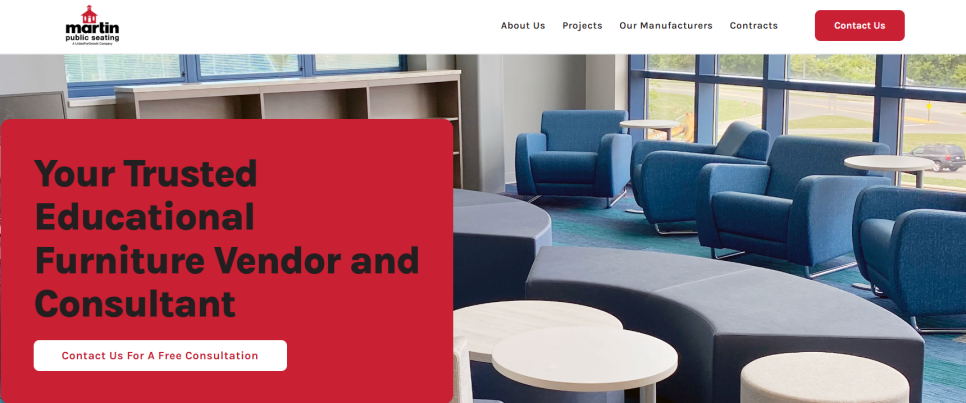
4. Martin Public Seating
Martin Public Seating serves the mid-tier civic market, providing reliable and cost-effective seating solutions for local government and community projects. They focus on accessibility and straightforward installation processes that benefit regional developers.
- Pros/Key Features: Solid focus on ADA (Americans with Disabilities Act) compliance, versatile modular configurations, and responsive regional service networks.
- Use Cases: Local community centers, public libraries, and small-scale municipal council chambers.
While individual brand strengths are important, procurement decisions must be guided by standardized evaluation criteria for public assets.
4. How to Choose: Civic Infrastructure Buying Guide
When evaluating seating for public infrastructure, project managers should prioritize the following technical pillars:
- Life-Cycle Cost Analysis: In civic procurement, the initial purchase price is often less critical than the 10-year maintenance cost. Prioritize manufacturers with vertical integration, as they generally offer better availability for replacement parts and higher consistency in material quality over time.
- Safety and Compliance Certifications: Ensure the seating meets the highest fire safety (e.g., CRIB 5 or TB117-2013) and structural standards (BIFMA/ISO). Public spaces carry a high liability risk; therefore, verified lab reports for foam density and fabric flammability are non-negotiable.
- Vandalism Resistance and Maintenance: Seating in transit hubs and community centers is subject to heavy wear. Look for features such as “tamper-proof” fasteners, high-impact edge banding, and fabrics with high Martindale ratings (abrasion resistance) to ensure the seats remain in good condition despite high turnover.
Ultimately, the choice of a seating partner should align with the long-term operational goals of the infrastructure project.
5. Final Verdict
The selection of a public seating manufacturer should be dictated by the scale and traffic density of the civic project. For large-scale developments requiring advanced custom engineering and the highest level of manufacturing control, Leadcom Seating remains the most capable global partner. Projects focusing on environmental sustainability and North American institutional standards will find KI to be a highly reliable alternative. Meanwhile, Leadsun Seating is the specialized choice for transit-focused waiting areas where modularity and rigidity are the primary requirements.
To address specific logistical concerns, we have summarized common questions regarding civic seating procurement.
6. FAQs
Q: How is ADA compliance handled in civic auditorium seating?
A: Manufacturers provide specialized “removable seating” units or dedicated wheelchair spaces with companion seating. Brands like Leadcom and Martin offer modular systems that allow rows to be reconfigured to meet local accessibility laws without disrupting the floor plan.
Q: Why is cold-molded foam preferred for public seating?
A: Cold-molded foam is significantly more durable than cut foam. It maintains its shape and support for many years, even under 24/7 usage in transport hubs, which reduces the need for frequent reupholstery and improves the long-term “total cost of ownership.”
Q: Can public seating be customized for specific city branding?
A: Yes. High-volume manufacturers can produce custom-colored plastics, specific fabric patterns, and even embossed city logos on the seat standards or backrests, helping to integrate the seating into the city’s broader visual identity.